
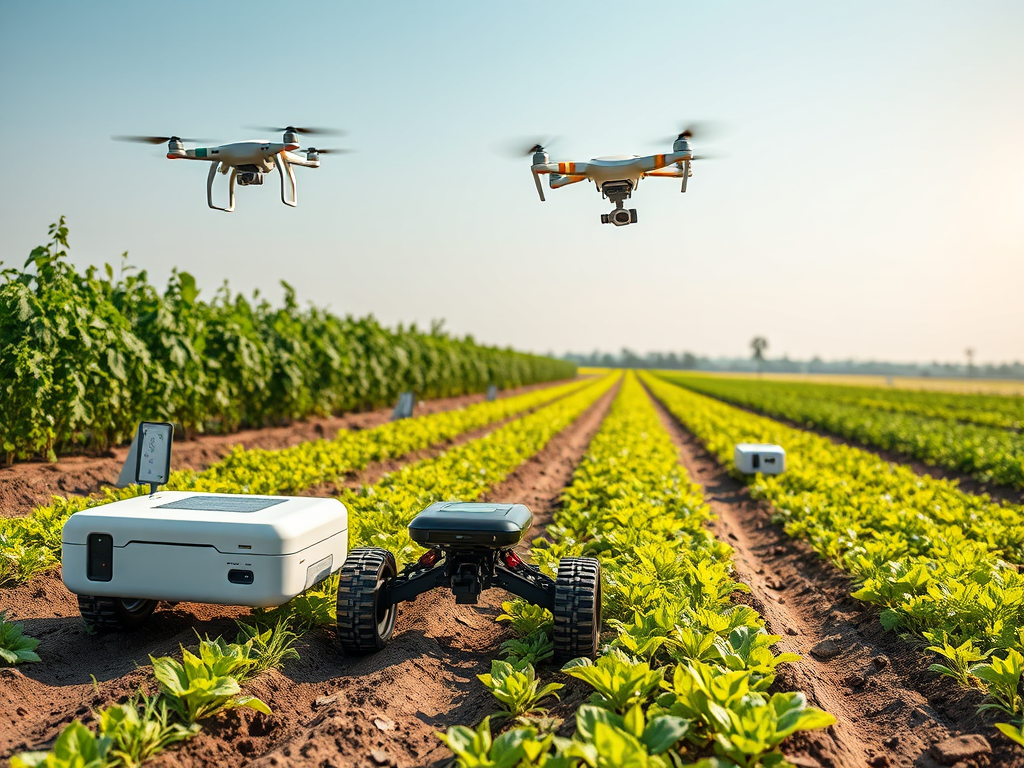
IoT in Agriculture: Transforming Farming into Smart Farming
Agriculture has always been the backbone of human civilization, but today it is undergoing a massive transformation with technology. Among the many innovations shaping the future of farming, IoT (Internet of Things) has moved from being an emerging idea to becoming a mainstream reality.
Simply put, IoT refers to everyday devices connected to the Internet that can collect, exchange, and act on data. From asking Siri a question to tracking fitness on a smartwatch, you’re already using IoT in daily life. In agriculture, this means farms, machines, and even crops can now “talk” to each other — making farming smarter, more efficient, and sustainable.

How IoT is Shaping Agriculture
IoT in agriculture involves using sensors, devices, and smart machines to monitor, analyze, and optimize farming activities. Farmers can track soil health, weather, irrigation, and crop growth in real-time — even from their smartphones. Let’s look at some of the key applications:
1. Robotics in Agriculture (AgriBots)
Automation in farming is not new, but IoT has taken it to the next level. Agricultural robots, or AgriBots, are now assisting farmers in tackling labor shortages and increasing efficiency.
- Weeding Robots: Equipped with image processing, they identify weeds and target them precisely — reducing pesticide use and saving costs.
- Machine Navigation: Tractors and ploughs with IoT and GPS can self-adjust to terrain and even be controlled remotely.
- Harvesting Robots: These delicate machines pick fruits and vegetables 24/7 using sensors and robotic arms, ensuring quality and reducing dependency on labor.
- Material Handling: Robots lift heavy loads, manage plant spacing, and optimize crop quality while lowering costs.
In India, where farm labor shortages are rising, AgriBots are emerging as a promising solution for future-ready farming.
2. Drones in Agriculture
Drones are one of the most visible examples of IoT in farming. They help with:
- Crop health monitoring
- Soil and field mapping
- Irrigation analysis
- Precision spraying and planting
- Yield predictions
With aerial drones (UAVs) and ground-based survey drones, farmers can get real-time insights about their fields. In India, drones are increasingly being adopted for crop spraying, especially in states like Punjab, Haryana, and Andhra Pradesh.

3. Remote Sensing for Smarter Farms
IoT-enabled remote sensing systems are like a farmer’s eyes and ears spread across the fields. These sensors collect continuous data on:
- Crop Growth: Detecting anomalies in size, shape, or color to prevent diseases.
- Weather: Tracking temperature, humidity, rainfall, and dew to plan better cultivation.
- Soil Health: Measuring nutrient levels, drainage, acidity, and organic matter to guide irrigation and fertilizer use.
Such data-driven farming can make agriculture more climate-smart, particularly in drought-prone regions of India.
4. Computer Imaging in Agriculture
Cameras and drones equipped with sensors generate images of crops, which are analyzed with advanced algorithms. This helps in:
- Detecting crop stress early
- Analyzing soil conditions
- Monitoring plant health over time
By using different light spectrums (like infrared), farmers can identify problems invisible to the naked eye.
Smart Applications of IoT in Farming
Beyond individual technologies, IoT is powering complete smart agriculture systems:
- Climate Monitoring: Smart weather stations collect real-time data to choose the right crops and improve yield.
- Greenhouse Automation: Sensors automatically regulate temperature, humidity, and lighting for healthier crops.
- Farm Management Platforms: Comprehensive dashboards track everything from soil quality to finances, helping farmers make informed decisions.
- Predictive Analytics: By analyzing IoT data, farmers can predict yields, detect risks of pests or diseases, and plan resources efficiently.
For example, solutions like SoilScout help reduce irrigation water use by up to 50% while improving fertilizer efficiency — a crucial benefit in water-scarce regions of India.
Why IoT Matters for Indian Agriculture
India is one of the largest agricultural economies in the world, but it faces serious challenges: unpredictable weather, shrinking farm incomes, and increasing demand for food. IoT can help bridge these gaps by:
- Reducing crop losses
- Conserving water and soil resources
- Lowering costs through automation
- Improving yields with precision farming
- Supporting climate-resilient agriculture
As the government pushes initiatives like Digital Agriculture Mission and subsidies for drones and smart farming tools, IoT adoption is set to grow rapidly in rural India.
Conclusion
IoT is no longer just a futuristic concept; it’s already transforming how we grow food. From AgriBots and drones to remote sensors and predictive analytics, smart farming is the way forward. For Indian farmers, embracing IoT is not just about higher yields — it’s about creating a sustainable, profitable, and resilient agriculture system for the future.


Leave a Reply