
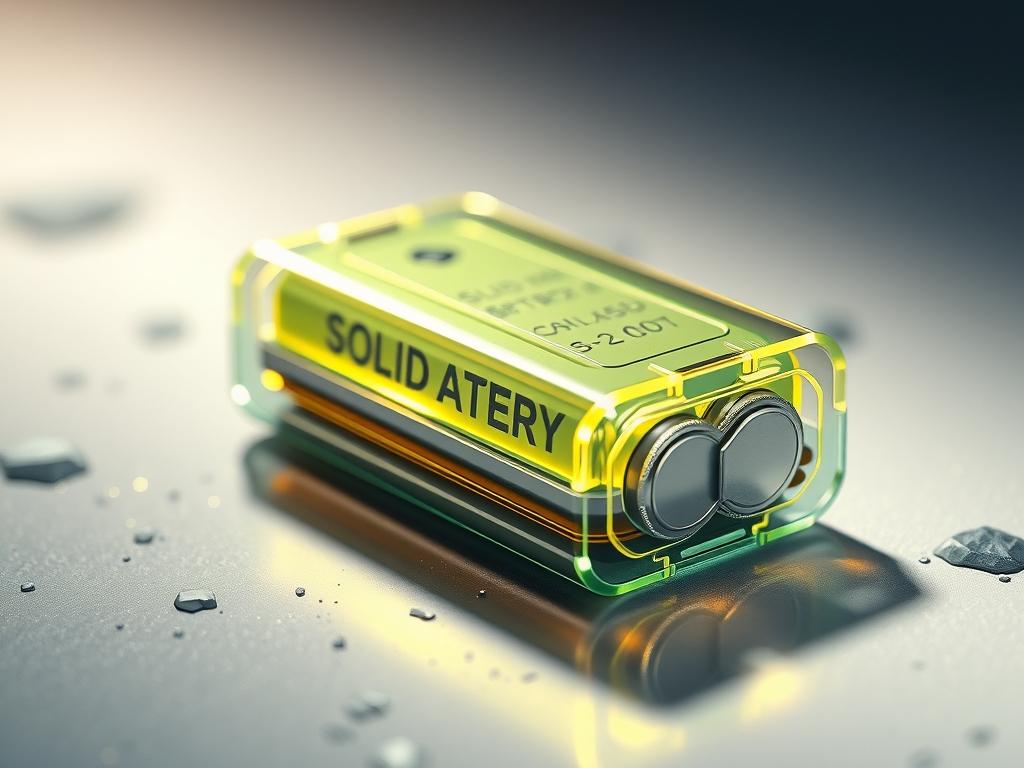
Solid state batteries represent a groundbreaking leap in energy storage technology, poised to revolutionize everything from electric vehicles to portable electronics. Moving beyond conventional lithium-ion, these next-generation batteries promise enhanced safety, superior performance, and a sustainable path forward.
What are Solid State Batteries?
A Fundamental Shift
Solid state batteries replace the flammable liquid electrolyte of traditional lithium-ion batteries with a solid material,
fundamentally changing their architecture and performance characteristics.
- Liquid vs. Solid: The core difference lies in the electrolyte. Instead of a liquid or gel, solid state batteries utilize a solid compound that conducts ions.
- Enhanced Stability: This solid material provides greater chemical and thermal stability, significantly reducing the risk of leaks or combustion.
- Compact Design: The solid nature allows for more compact and flexible battery designs, enabling higher energy density in smaller spaces.
How They Work: The Solid Electrolyte Advantage
The solid electrolyte is the heart of a solid state battery, enabling safe and efficient ion transport. Solid Electrolyte A thin, dense solid material (e.g., ceramic, polymer, or sulfide) replaces the volatile liquid. Ion Movement Lithium ions move through this solid medium from anode to cathode during discharge, and vice versa during charge. Lithium Metal Anode The solid electrolyte allows the use of lithium metal anodes, which offer significantly higher energy capacity. No Dendrites The rigid solid electrolyte suppresses the formation of dendrites, a common cause of short circuits in liquid cells.
Key Benefits: Energy Density, Safety, and
- Charging Speed: Solid state batteries offer a trifecta of advantages that address the primary drawbacks of current battery technology.
- Higher Energy Density: Up to 2x current lithium-ion, enabling longer range for EVs and extended life for portable devices.
- Superior Safety: Elimination of flammable liquid electrolytes drastically reduces fire risk and improves thermal stability.
- Ultra-Fast Charging: Potential for 80% charge in minutes, making electric vehicle refueling comparable to gasoline.
- Longer Lifespan: Improved chemical stability leads to more charge cycles and a longer overall battery life.
The Limitations of Current Lithium-Ion Technology:
While lithium-ion batteries have powered the modern world, they face inherent limitations that hinder further advancements.
- Safety Concerns: Liquid electrolytes are flammable, posing risks of thermal runaway and fires, especially in large-scale applications.
- Limited Energy Density: The capacity for energy storage is reaching its theoretical maximum, limiting range and runtime for devices.
- Slower Charging: Rapid charging can degrade battery life and increase heat generation, impacting overall longevity.
- Cycle Life Issues: Repeated charging and discharging can lead to capacity fade and shortened operational lifespan.
Current Challenges in Development and Manufacturing:
Despite their promise, solid state batteries face significant hurdles before widespread commercialization. Cost: Manufacturing processes are currently complex and expensive, making them uncompetitive for mass markets. Scalability: Producing large volumes of solid state electrolytes with consistent quality remains a challenge. Interfacial Resistance: Ensuring good contact and low resistance between solid layers is critical for performance. Material Stability: Finding solid electrolyte materials that are stable across wide temperature ranges and operating conditions. Cycle Life: Achieving consistent performance over thousands of charge cycles, especially for automotive use.
Leading the Charge: Key Players and Breakthroughs
Numerous companies and research institutions are racing to bring solid state battery technology to market.
- Quantum Scape: Pioneering anode-free solid-state battery technology, collaborating with Volkswagen for EV integration.
- Toyota: A long-standing player, developing sulfide-based solid-state batteries with plans for EV commercialization by mid-decade.
- Solid Power: Focusing on sulfide-based electrolytes, backed by Ford and BMW for automotive applications.
- CATL / Samsung: Major battery manufacturers investing heavily in R&D to transition to solid state capabilities.
The Road Ahead: Scaling Production and Cost Reduction
The transition to a solid state future hinges on overcoming manufacturing challenges and driving down costs.
- Pilot Production
Initial small-scale manufacturing to refine processes
and validate designs. - Material Innovation
Development of cheaper, more abundant, and
higher-performing solid electrolyte materials. - Automated Assembly
Implementing highly automated lines to reduce labor
costs and increase output. - Strategic Partnerships
Collaborations between automakers, battery
developers, and material suppliers. - Mass Commercialization
Achieving cost parity with lithium-ion and widespread adoption across industries.
Government incentives and sustained R&D investment will be crucial for accelerating the path to mass market availability and affordability.
The Solid State Revolution:
A bold step towards a truly sustainable, high-performance energy future. With ongoing innovation and investment, solid state batteries are poised to redefine energy storage, offering cleaner, safer, and more powerful solutions for generations to come.
- Solid electrolyte,
- All-solid-state,
- Lithium-metal anode,
- High energy density ,
Materials:
- Sulfide electrolyte,
- Oxide electrolyte (e.g., LLZO),
- Polymer electrolyte,
- NMC / LFP (cathode),


Leave a Reply